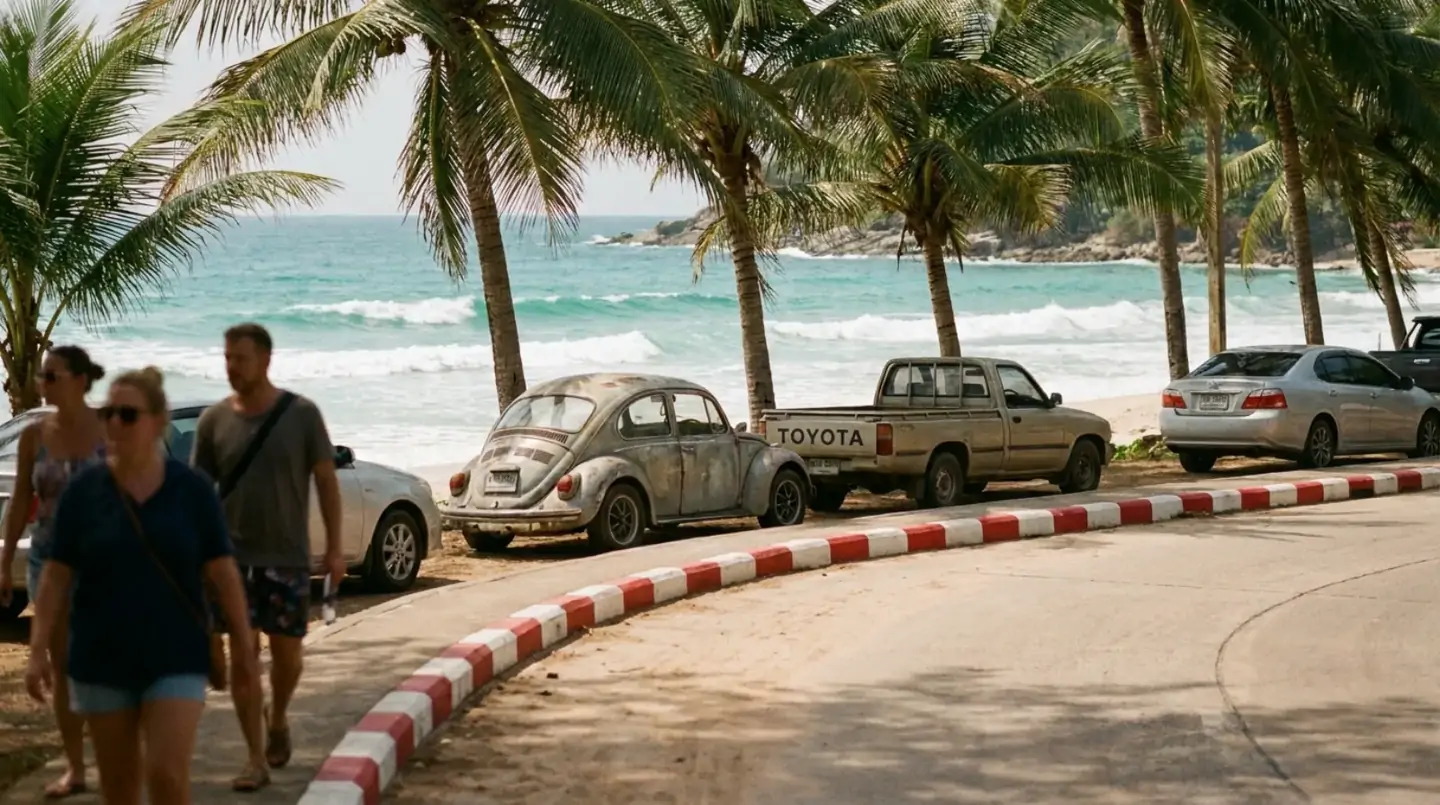
Renting or Buying a Car in Phuket
Buying a car in Phuket makes sense for people who live on the island all year and are ready to deal with registration, insurance, the annual inspection and, eventually, the sale. For a few months of wintering, and certainly for a holiday, renting wins on every count except one: the feeling that the car is yours.
Updated 13 September 2026
- Delivery to your hotel and the airport
- Answers in chat, no phone calls
- We go through the insurance before you sign
Who buying actually suits
People who live in Phuket permanently and hold a long stay visa with a confirmed address. For them a car is an ordinary household tool: you drive it daily, you service it yourself, and no return date hangs over the arrangement.
The second group are the ones who come back every season and leave the car in storage between visits. That works, but it needs a parking spot, somebody who will start the engine every couple of weeks, and an honest understanding that the tropics are merciless to machinery. Damp, salt and sun eat rubber seals, paint and wiring far faster than a temperate climate does.
Who it does not suit
Anyone here for three or four months. By the time the purchase, the insurance and the paperwork are finished, a third of the stay has gone, and the end of it brings a rushed sale at a poor price.
There is a third option people think about less often: buying a used scooter for daily errands and renting a car only for longer trips. A bike for the neighbourhood costs little, is serviced for next to nothing, and sells easily at the end because demand on the island never stops.
What it means for the car and the wallet
With a rental, the company carries everything. A breakdown means a replacement car, scheduled servicing is not your subject at all, and cover is written into the agreement. Your exposure stops at the insurance excess and the deposit hold.
With your own car it is the reverse. The air conditioning dies in July and you are the one hunting for a workshop and waiting on a part. Tyres wear out and that is your problem. Batteries live shorter lives in the tropics than they do at home, and they always fail at the least convenient moment.
One more thing owners forget: parking. In the resort districts a space at your building is not a given, it is a separate arrangement with the landlord, and in high season those arrangements get tight.
About repairs
Workshops on the island run from main dealers to small roadside places, and most of them work perfectly well. The difference is time. Parts for popular models sit on a shelf nearby; parts for anything unusual come across from the mainland.
Compare that with a rental through the eyes of somebody whose car has just stopped. You call the company and an hour later you are driving a replacement. An owner spends the same day on a tow truck, a workshop and a conversation about whether the part exists.
Step by step, if you buy anyway
Order matters more than speed here. A car whose registration book was never properly transferred cannot be sold later, and that is the single most common trap foreigners fall into on this island.
Start with the book itself: whose name is in it, where the car is registered, and whether the seller can attend the transfer in person. Then the insurance, then the inspection certificate if the car is old enough to need one, and only then the money.
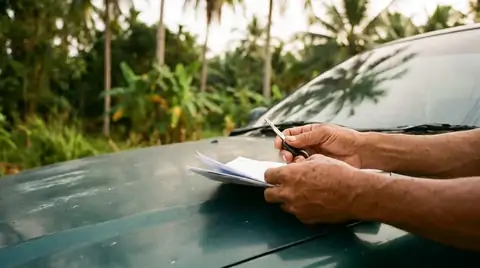
A written record of the handover helps more than people expect. Photographs of the odometer, the book, the plate and the seller's document take two minutes and settle every argument that comes afterwards.
Why a long rental often wins
A long rental of several months puts the car under the company's responsibility and leaves you nothing but the driving. For a season on the island that is an honest trade between freedom and paperwork.
It also removes the exit problem entirely. You hand the keys back and fly out, instead of spending your last three weeks photographing the car for classified adverts.
A month or a season as the middle path
A long rental is built differently from a daily one: a different contract, a different attitude to the car, often a different part of the fleet. The car is matched to the job and stays with you for the whole term, while servicing runs on the company's schedule.
For somebody living here for a season that covers almost everything ownership gives, minus the right to sell the car at the end. In exchange you spend no time on registration and you do not risk buying somebody else's problem.
Flexibility is the separate benefit. In the rainy months you want something that sits higher, in summer a compact car is plenty, and for a couple of weeks with visiting family you want a minivan. With one car of your own none of that is possible.
There is a practical detail foreigners appreciate quickly. A rental agreement is a document you can show, and it names the driver and the term. An owner without a properly transferred book has nothing of the sort.
How to count honestly
The rent against buy comparison is almost always done wrong: people take the price of the car and divide it by the months. Left out of the sum are insurance, servicing, tyres, parking, the value lost on resale, and the hours you will spend on all of it instead of being on a beach.
Resale deserves its own line. Cars on the island rise and fall in value on a rhythm of their own, driven by the season and by how many people are leaving Phuket that year. Selling in the low season is almost always worse, and the low season is exactly when most winter stays end.
The working test is simple. If you are here for more than a year and you are sure of it, buying starts to make sense. If the term is shorter or the plans move around, a rental leaves you free to fly out whenever you choose.
One last point. A car of your own in the tropics wants attention constantly, not when the mood strikes. If you came here to rest, that attention is exactly what you do not want to spend.
If you are weighing a long rental against buying, tell us how long you are staying and what the car has to do. Message us on WhatsApp with your dates, or Telegram if you prefer, and say whether you need something that sits higher for the rainy months.
ImportantBuying privately without transferring the registration book is the classic trap for foreigners. On paper the car stays somebody else's, fines go to the previous owner, and you will not be able to sell it at all.
Cars for this trip
See all →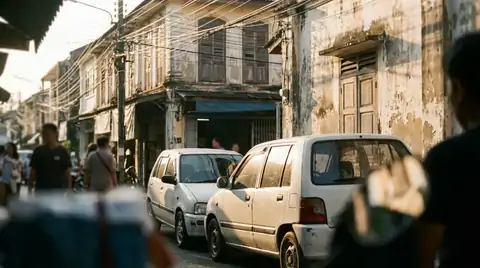

Common questions
Can a foreigner buy a car in Phuket at all?
Yes, and it is done regularly, but the paperwork asks for a confirmed address in Thailand and a visa that supports staying long enough to use the car. Without those the registration book cannot be put in your name, and a car in somebody else's name is a car you cannot sell.
Is a long rental cheaper than owning over a season?
Once insurance, servicing, tyres, parking and the loss on resale are added up, a season of ownership rarely comes out ahead. The bigger difference is time: the rental company absorbs every breakdown and every renewal, while an owner spends their own days on them.
What happens to a rental car if it breaks down?
You call the company and a replacement is arranged, usually the same day, because keeping renters moving is their business. With a car of your own the same morning turns into a tow truck, a workshop and a wait for parts that may have to come from the mainland.
Do I need a Thai licence to rent for several months?
For a rental an International Driving Permit alongside your home licence is what the company and the police expect to see. A Thai licence becomes relevant only once you are living here properly, and by that point the buying conversation is a different one.
Is buying a scooter and renting a car a sensible mix?
It is one of the more practical arrangements on the island. A cheap used scooter handles the daily errands around your own district, and a rented car appears only on the days when you are driving across the island or carrying people and shopping.
Write to us — we will find the right car
We answer in chat: no forms, no phone calls, no waiting on hold.