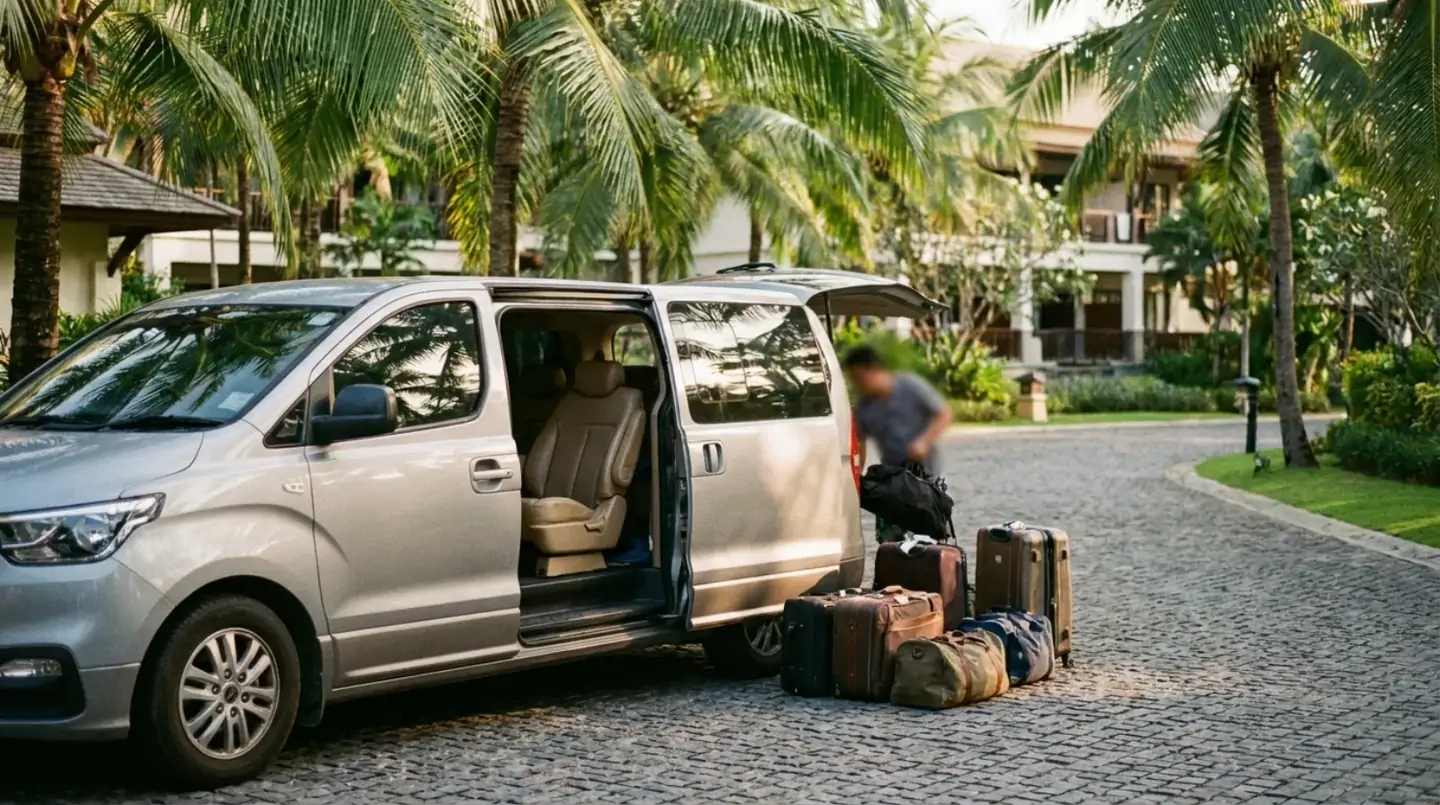
Currency Exchange in Phuket on the Way
A driver in Phuket needs cash more often than expected: markets, small car parks, roadside kitchens and some fuel stations work more readily with notes than with cards. The logic is simple. Changing money is easier along the way, with an exchange counter built into the route, than as a separate expedition made for its own sake.
Updated 13 September 2026
- Delivery to your hotel and the airport
- Answers in chat, no phone calls
- We go through the insurance before you sign
Where money is changed on the island
Exchange counters stand everywhere in Phuket, but their terms differ. In Phuket Town and along the main roads the rate is traditionally better than in the beach strip, where rents are higher and the difference is written into the numbers on the board.
For a driver the balance shifts: a counter with an awkward approach and no parking loses to the one next door, even if the board is slightly kinder. Fifteen minutes circling narrow streets eats any difference.
Banks and cash machines
Bank branches keep weekday hours and sit mostly in the town and by the shopping centres, where parking solves itself. Cash machines are almost everywhere, but they charge for a withdrawal on a foreign card, and on larger sums that is noticeable.
The most practical approach is to combine the exchange with something else: a trip to a shopping centre, a run to the market, a day in town for other business.
What it means for the car
Exchange counters in the beach districts sit on the narrowest and busiest streets. Stopping at the kerb there is not an option: a red and white marking means a round the clock prohibition, and the traffic behind you stops instantly.
In town it is simpler, since there are usually side streets and open areas nearby. Go in outside the peak hours, when the old part of Phuket Town is already densely parked.
Cash in the car
Money and documents do not stay in the cabin, not for a minute and not even in a supervised car park. Rental insurance almost never covers the contents of the car, and there will be nobody to argue with.
If a long drive follows the exchange, put the main sum away before you set off and keep in your pocket only what the market or the car park will need.
How to do it, step by step
Bring your passport: exchange requires the document, and a copy is often not enough. The same applies at a bank, where the requirements are usually stricter than at a street counter.
Look at the rate in advance and compare two or three counters along your route. The difference between the beach strip and the town is visible immediately, and it is worth waiting for the next trip into Phuket Town for.
Check what the board actually promises before you hand anything over: some counters post one rate for large notes and another for small ones, and the difference is not always advertised loudly.
At the window
Count the money without stepping away from the window, and ask for part of the sum in small notes. Markets, small car parks and roadside kitchens change large notes reluctantly, and sometimes cannot change them at all.
Keep the receipt from the transaction. It is useful if you need to change money back before your flight, and it saves conversations generally.
ImportantChange money only at licensed counters and bank branches, the ones with a board and a receipt. Offers to exchange at a good rate privately, in a car park, by a beach, through somebody's friend, come with no guarantee at all, and there will be nobody to take it up with afterwards. The saving on the rate is always smaller than the risk.
Why a driver needs cash here
Markets come first. Not every trader has a terminal, and fruit, fish and herbs are bought with notes. Small denominations speed a market purchase up considerably.
Second are the paid car parks and the small areas by the beaches and viewpoints. Payment there is on the spot and in cash, and having no change turns parking into a negotiation.
Roadside details
Roadside kitchens, stalls selling water and fruit on the highway, the car wash, topping up the tyres: all of it runs on cash. On long routes through the north and over to the mainland that becomes obvious.
A fine is paid against a notice at a police station or through a bank, and cash is useful there too. Keep the counterfoil until the end of the trip, because a verbal arrangement with no paper carries no weight.
Building the exchange into your route
The most convenient option is a shopping centre. It has exchange counters, cash machines and a bank, and the car spends that time on a covered level in the shade instead of baking on the street.
The second is a day in Phuket Town. The exchange, the market and the old streets fit into one visit, and the car only has to be parked once on a large surface car park.
If your accommodation is far from town, change enough for several days at a time. Driving across the island for cash because of a small difference in the rate is the most pointless journey available.
One more habit that saves time: keep a small reserve of change in the car, separate from the main money. Parking at a viewpoint, water on the highway, air for a tyre, all of it is small change that you do not want to be digging for among large notes.
If you want the car brought to your hotel so the first day starts without any of this, just ask. Write to us on WhatsApp with your dates and where you are staying, or Telegram if that is easier.
Cars for this trip
See all →
Common questions
Where is the best place to change money in Phuket?
Rates are traditionally better in Phuket Town and along the main roads than in the beach strip, where rents push the numbers down. For a driver the deciding factor is often parking, because circling narrow streets for fifteen minutes costs more than the difference on the board.
Do I need my passport to exchange currency?
Yes, the document itself is required and a photograph or a copy is often refused. Banks are usually stricter about this than street counters, so carry the passport if the exchange is part of your plan for the day.
Is it better to change cash or withdraw from a machine?
Exchange counters usually beat a machine on rate, because a foreign card withdrawal carries a fee on top. Many visitors bring part of the money as cash and keep the machine as a fallback rather than the main plan.
Why should I ask for small notes?
Markets, roadside stalls and small car parks either dislike large notes or genuinely cannot change them. Breaking part of the sum into small denominations at the counter saves an awkward conversation later in the day.
Are private exchange offers safe?
No, and there is nobody to complain to afterwards if something goes wrong. Use licensed counters and bank branches that display a rate board and give you a receipt.
Write to us — we will find the right car
We answer in chat: no forms, no phone calls, no waiting on hold.