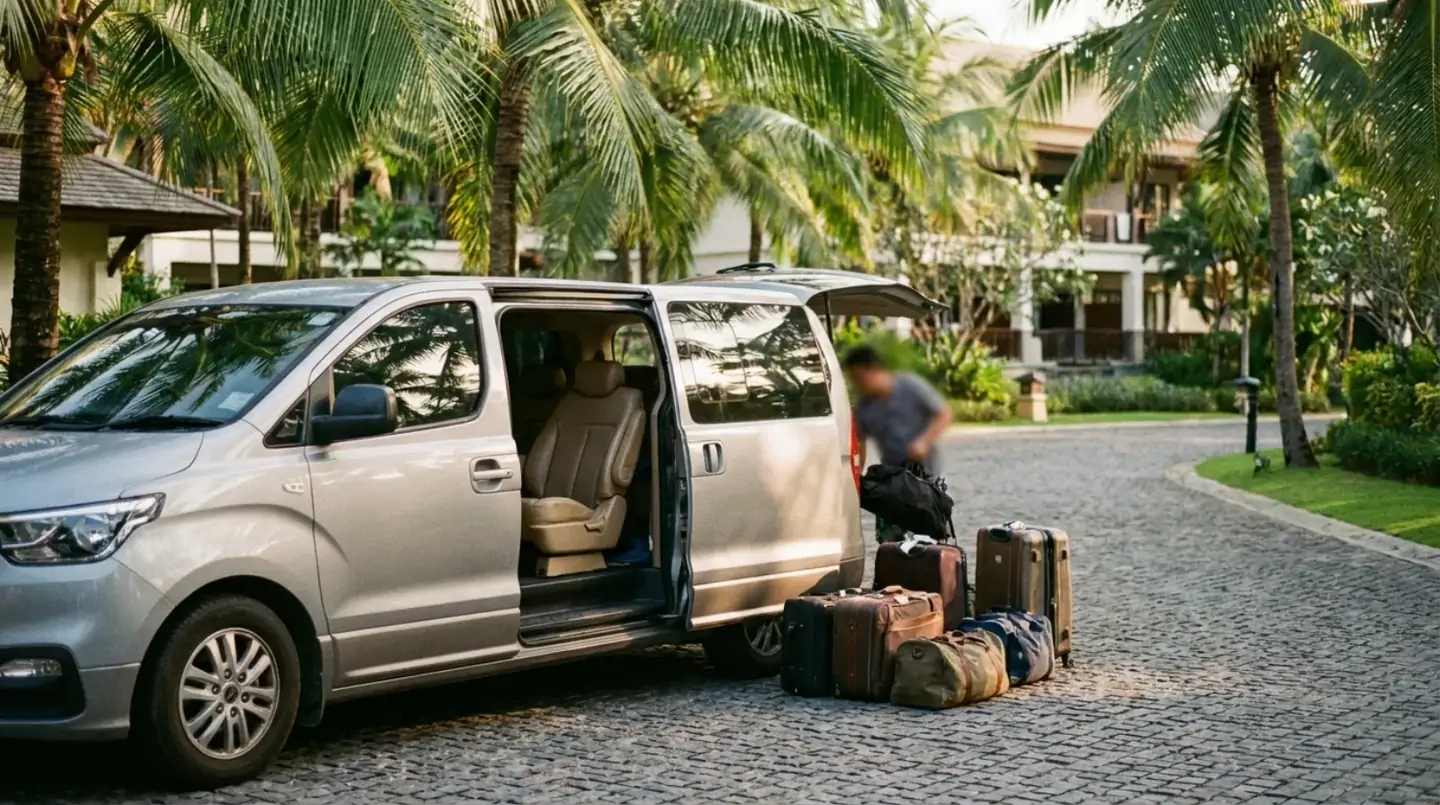
Driving to the Big Buddha on Phuket
One road leads to the statue on the Nakkerd hills: a turning off the highway that runs from Chalong towards Kata, and then several kilometres of unbroken hill road upwards. Any car can get up there. Getting down properly is what defeats people, because this is where brakes fail for drivers meeting mountains for the first time.
Updated 13 September 2026
- Delivery to your hotel and the airport
- Answers in chat, no phone calls
- We go through the insurance before you sign
How to get there without missing the turn
The starting point for everyone is the large roundabout in Chalong. From it a highway heads towards Kata, and after a couple of kilometres a road branches off it to the right and upwards. The turn is signed, but the sign is small and stands close to the junction itself, so move into the right hand lane early.
From there the climb is continuous. The road is surfaced and has two lanes, but it is narrow: in places passing a coach happens with nothing to spare, and the corners are blind, so you cannot see what is behind them until the last moment. Hold a speed that lets you stop within the distance you can see, which is noticeably slower than you would like.
Where the parking areas begin
The car parks are spread down the slope in several tiers. The first appears well before the top, others follow, and the highest one sits right by the statue, small and permanently occupied in high season. The logic is simple: take the first free space you see, because there may be nothing higher up and there is nowhere to turn round at the top.
The walk from the lower tiers is short and runs uphill along the road. In the middle of the day that climb in the sun tires you more than looking at the statue does, which is one more argument for setting off early.
What that means for the car
The climb loads a full car seriously. The gearbox holds low gears, the revs are high, the speed is low and there is almost no airflow through the radiator. The air conditioning cools less well during that, which is normal behaviour rather than a fault, and everything returns on level ground.
An economy car climbs without difficulty even fully laden; the only question is the pace. A crossover takes the same hill road more calmly simply because it has torque in reserve, and its higher seating gives a better view through a corner when passing coaches.
The descent is the important part
You go down in a low gear. The engine then holds the car back and the brake is used in short applications, with time to cool between them. Anyone descending in neutral or with the pedal held down arrives at the bottom with a long soft pedal, and that is the moment this whole paragraph exists for.
In rain the hill road is more slippery than usual, particularly in the first minutes of a downpour. On a descent in that weather the speed comes down in advance rather than once the car has already started running wide in a corner.
ImportantA soft brake pedal on the descent means overheating and you cannot keep driving on it. Stop at the first safe widening of the road, switch the engine off and wait for the brakes to cool. Damage caused by overheated brakes is usually treated by insurers as misuse rather than as a claim.
Where to park at the top
The upper area is small and level, and it is marked out, but in high season the density is such that leaving is harder than arriving. The only way not to lose a quarter of an hour on the way out is to park nose outwards from the start.
There is almost no shade up there, since the ridge is open and the trees are few. An hour of standing heats the car to the point where the wheel cannot be held, so a couple of minutes with the doors open before you set off is part of the route rather than a whim.
What to leave in the car
Plenty of people walk across the upper area, and a rucksack on the back seat is visible to all of them. Move valuables into the boot in advance, down at the bottom: rearranging bags in the car park itself is a demonstration of what you have put where.
Clothing for the upper platform means covered shoulders and knees. Keeping a wrap in the car is simpler than solving the problem at the entrance, and in an air conditioned cabin it is no burden.
When to go
Early morning is the best option on every count at once: the road is empty, the parking free, the sun has not yet turned the open ridge into a frying pan, and the visibility from up there is usually at its best at that hour.
Sunset is the most popular and the least convenient time. Traffic streams upwards, the spaces run out, and afterwards everybody drives down at once in the dark. A hill descent at dusk behind a line of brake lights is not what you came up for.
The rainy months
In the rains the climb and the descent both need more attention, and in exchange there are far fewer people. If you go in that weather, plan a window between squalls and do not linger at the top, because the ridge is exposed and the weather changes there faster than it does below.
What else is nearby
The same road from the Chalong roundabout leads to the main temple of the district, and it makes sense to combine the two into one morning: they are close, both require covered clothing and both ask for an early hour for the same reason.
There are fuel stations at the bottom by the turning onto the hill road, which is the convenient place to top up before the climb. There is nothing on the hill road itself, and starting the ascent with a nearly empty tank is unwise, because working in low gears uses noticeably more.
If a beach on the west coast follows the statue, the highway continues from that turning towards Kata, and carrying on that way is easier than going back to the roundabout. The road there is hilly as well, but considerably simpler than the climb you have just done.
Tell us if the hills are part of your plan and we will make sure the car suits them. Message us on WhatsApp with your dates, or Telegram if you prefer, and say how many of you will be travelling.
TipFill the tank at the bottom before the climb. There are no stations on the hill road, and consumption while working in low gears on a long ascent is noticeably higher than usual.
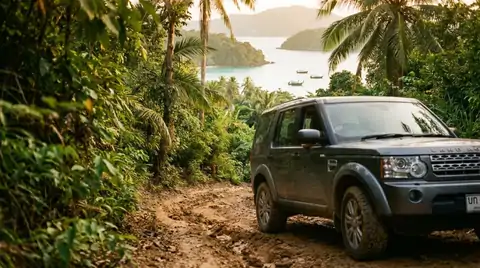
Cars for this trip
See all →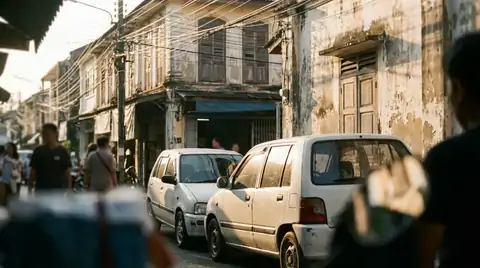
Common questions
How do I drive to the Big Buddha?
The landmark for every route is the Chalong roundabout, from which a highway runs towards Kata, and after a couple of kilometres a road turns off to the right and upwards. From there it is several kilometres of hill road to the parking tiers, and there is no other approach to the statue.
Is there parking at the Big Buddha?
The areas are spread down the slope in several tiers, with the highest one right by the statue and permanently full in high season. Take the first free tier you reach, because there may be nothing above it and there is nowhere to turn round on a narrow hill road.
Will an ordinary car make it up?
It will, since the road is surfaced along its whole length. Fully loaded the climb happens in low gears and slowly, and the air conditioning cools less well while that goes on, which is normal behaviour for a car under load.
How do I avoid overheating the brakes on the descent?
Select a low gear and let the engine hold the car, using the brake in short applications instead. A pedal held down continuously on a long gradient heats up, and at the bottom its travel becomes long and soft.
Do I need special clothing to visit the statue?
The upper platform does not admit bare shoulders or knees. It is simpler to carry a light wrap and longer shorts in the car than to deal with it on arrival, and in an air conditioned cabin they are no inconvenience.
Is sunset a good time to drive up?
The view is at its best then, but so is the traffic, and everyone descends at once in the dark afterwards. Early morning gives you the same road empty and the parking free.
Write to us — we will find the right car
We answer in chat: no forms, no phone calls, no waiting on hold.