
High Season in Phuket Behind the Wheel
In high season the roads of Phuket fill up and travel time stops matching distance: a pass crossed in a few minutes during the quiet months stands still in the evening. The behaviour of the traffic changes too, because the beach streets carry far more rented scooters whose riders took to the road yesterday.
Updated 13 September 2026
- Delivery to your hotel and the airport
- Answers in chat, no phone calls
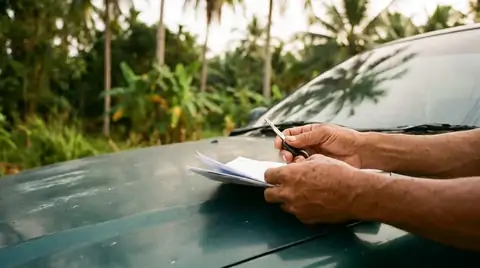
- We go through the insurance before you sign
How the roads change at the peak
The main difference is density. The road between Patong and the town over the pass, the approaches to the southern beaches, leaving Kata in the evening: in season all of that becomes slow movement, and you can no longer plan a day by kilometres.
The second is the mix of traffic. Alongside residents and tour vehicles there are now a great many rented scooters whose riders are on their first day in a country that drives on the left. They ride unevenly, brake suddenly and change position without using the mirrors.
Where it thickens most
The island's pinch points are known in advance: the Kathu to Patong pass, the Chalong circle, the approach to the piers in the morning, the Patong seafront in the evening and the shopping centre entrances at weekends.
Old Phuket Town on market days is its own case. The streets there are narrow and one way, and the number of cars in season does not adjust itself to their width.
What it means for the car
More time in traffic means more load on the air conditioning and on your patience. Check the cooling at idle when you collect the car, because dense traffic in the sun is the hardest condition the system ever works in.
Slow movement with frequent stops also heats the brakes, particularly coming down the pass in a queue. A lower gear and short applications instead of a permanently held pedal work here even at low speeds.
Size matters more than usual
In season a short car wins twice: it slots into the traffic more easily and it parks more easily. A long body in Patong or by the southern beaches at the height of the day turns finding a space into a separate expedition.
Mirrors and distance become the main tools. A scooter in the blind spot is the norm of the season, and checking the mirrors before every move happens far more often here than it does at home.
How to plan a day in season
Shift your departures to early morning. The roads are clear before nine, there is parking at the beaches and the viewpoints are empty, which makes it the best hour of the day on the island in season.
Plan the day by geography rather than by wishes. If you are in the south in the morning, then lunch and the second stop should be in the south as well: two crossings of the island at the height of the day eat the time you meant to spend by the sea.
Book anything with a fixed start, a boat or a course, with a margin that assumes the road will be slow. The one thing you cannot recover in season is a departure time set by somebody else.
Evening returns
Allow extra for the way back. Everybody returns from the southern beaches and the piers at the same time, and a queue at the car park exit is an ordinary part of the evening.
If you are not in a hurry, wait twenty minutes in a cafe. On the island's narrow sections that is faster than sitting in the general flow, and certainly calmer.
ImportantIn dense traffic scooters ride between the rows of cars, and a door opened at the kerb without a glance in the mirror is the classic accident of the season. Look in the mirror before getting out and open the door with your far hand: that turns your body and makes you look behind.
Parking at the peak
Spaces at the popular beaches run out by mid morning, and after that the circling begins. It is more sensible to drive straight to an organised area slightly further from the water and walk five minutes.
The red and white kerb is enforced more tightly in season, because the narrow streets have to stay passable and removal trucks work regularly in the tourist districts. Saving a hundred metres there costs you an evening.
Covered car parks
At midday a covered shopping centre car park is the best place for a rental car. The cabin does not bake, and after two hours inside you get into a normal temperature. Look for spaces on the upper levels.
Note the level and a landmark. In season the car parks are full of identical cars, and finding yours from memory takes longer than you would think.
What high season gives a driver
The weather. Rain is rare and short, the surface is dry and visibility is good, so the island's roads are at their most predictable and long routes can be driven without watching the sky.
Everything works: fuel stations, car washes, workshops, markets, and the ferries and boats run to timetable. Planning a trip that includes going out to sea or crossing to the mainland is easiest in the dry period.
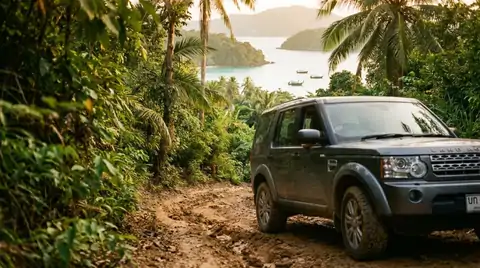
The roads themselves are in their best condition too: the potholes from the wet months have been patched, the markings are visible, and the unsurfaced turnings to the far points are dry and passable even for a low car.
The trade off is availability. Cars are booked out well ahead in these months, and the sensible move is to arrange one before you fly rather than after you land.
If your dates fall in the busy months, book early and tell us what the car has to do. Write to us on WhatsApp with your dates and where you are staying, or Telegram if that is easier.
Cars for this trip
See all →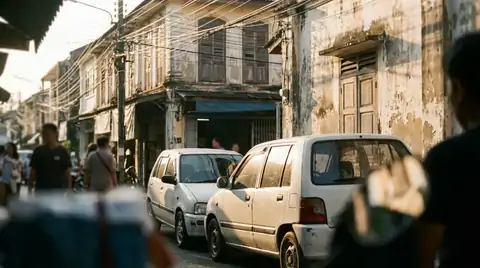
Common questions
Is it harder to drive in Phuket during high season?
The roads are the same, but they are denser and the traffic includes many first day scooter riders. Distances stop predicting travel time, and the fix is to leave early and plan the day by geography rather than by wishes.
When are the roads clearest in season?
Before nine in the morning, when the beach car parks still have space and the viewpoints are empty. The evening peak, from the end of the working day until dark, is the slowest window on the island.
Where should I park at a busy beach?
At an organised area slightly further from the water, then walk the last five minutes. Circling the seafront for a closer space costs more time than the walk, and the red and white kerb is enforced with removal trucks in season.
Does a smaller car help in high season?
It does, both in slotting into dense traffic and in parking, particularly in Patong and around the southern beaches. A long body turns every stop into a search, which is the part of the day that actually costs you time.
Should I book a car before arriving in high season?
Yes, because the fleet is allocated well ahead and what remains close to the date is whatever nobody else wanted. Booking early is also the only way to get a specific class rather than a substitute.
Write to us — we will find the right car
We answer in chat: no forms, no phone calls, no waiting on hold.