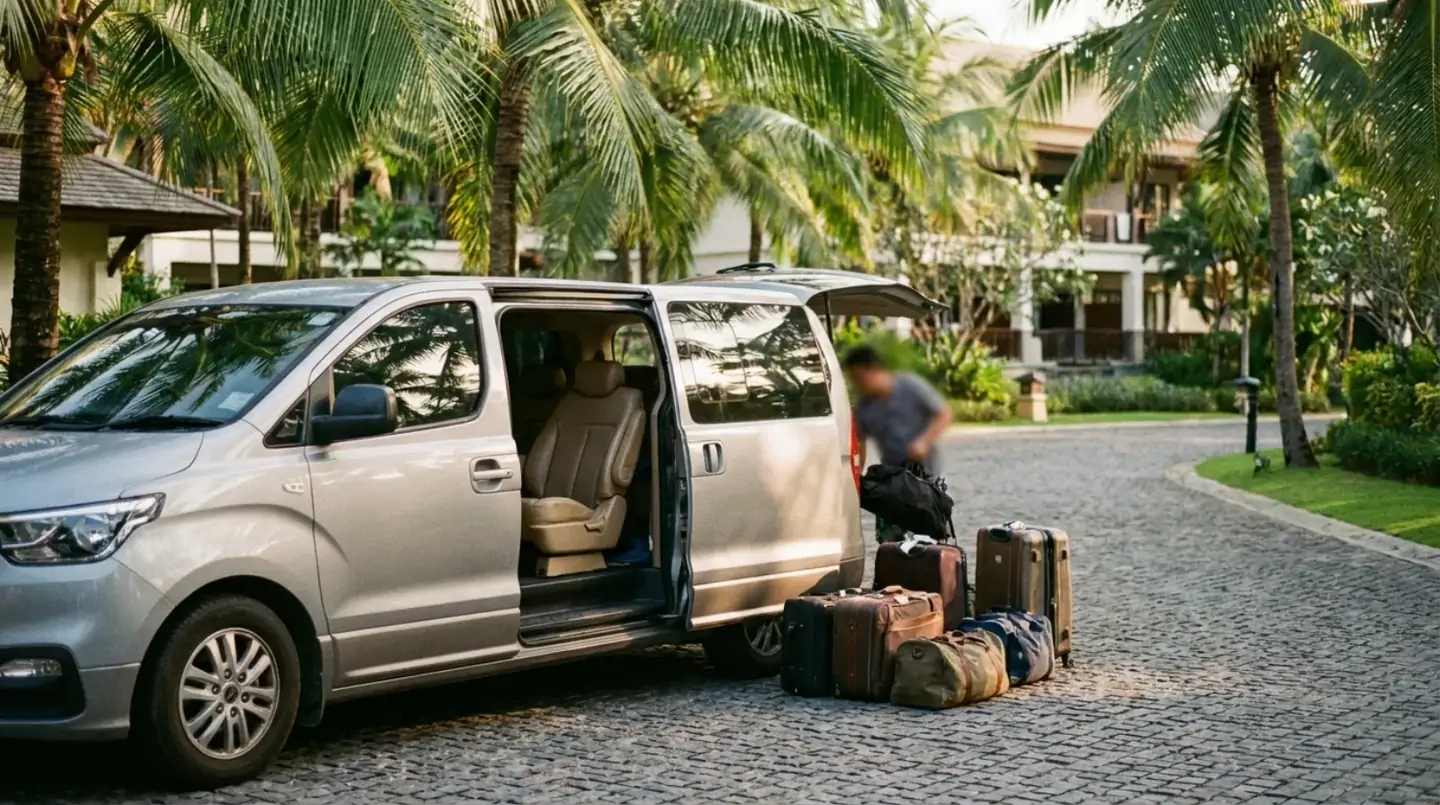
Low Season in Phuket Behind the Wheel
In the low season the roads of Phuket become noticeably freer: the passes clear without queues and there is somewhere to park by the beaches even at midday. In exchange you get weather, in the form of short heavy downpours after which the surface changes character for half an hour and asks for a different way of driving.
Updated 13 September 2026
- Delivery to your hotel and the airport
- Answers in chat, no phone calls
- We go through the insurance before you sign
Why the low season suits a driver
Traffic comes first. Roads that stand still in high season move in the low one: the pass between Kathu and Patong is crossed calmly, the approach to the southern beaches is not a queue, and there is space to park in the Old Town.
The second is freedom of route. You can set off on impulse, without allowing for traffic, and cover half the island in a day. The distant points, the reserve, the northern beaches, the eastern roads, open up precisely in this period.
Parking stops being a problem
By the beaches, the markets and the shopping centres there is almost always space, and that changes the logic of a day: you park where it suits you rather than where something happened to be free.
The roads themselves are unchanged and the rules on them are not relaxed. An empty highway invites speed, and the checkpoints at the district entrances work all year round.
The behaviour of the traffic changes too. There are fewer tourists on the road, which means fewer rented scooters riding uncertainly and braking in unexpected places. Driving becomes predictable, and that, rather than distance, is what decides how tired you are at the end of a day.
What it means for the car
The first minutes of rain are the most slippery time. A film of dust and oil lifts off the surface and grip drops sharply, especially on hot tarmac. Take the speed off as soon as the downpour starts, not once it has visibly got worse.
Water pools quickly on the island's roads and drains slowly. Low sections at junctions and the turnings down to the beaches flood within minutes, and their depth cannot be judged by eye.
Wipers, lights and air conditioning
Check the wipers and the washer level when you collect the car. In a downpour visibility falls to a few metres, and a screen with a film of dust on it makes that worse.
Dipped headlights in daytime rain are not a formality: scooters and oncoming cars have to see you. The air conditioning meanwhile works as a dehumidifier, because without it the glass mists instantly.
What to do when the rain arrives
If a wall of water arrives suddenly, the sensible thing is to wait it out. Downpours here are short: twenty minutes in a cafe or on a forecourt solves the problem completely, while driving blind solves nothing.
When waiting is not possible, halve your speed, switch on the dipped beam and open the gap to three car lengths. The car in front brakes harder than you expect in those conditions.
Pick where you stop with some care. A wide forecourt or a car park is right; the verge of a highway with water running across it is not, because you are hard to see and easy to hit.
After the rain
The first few kilometres after a downpour need attention on the turnings and verges, where washed out stones and mud are left behind and the markings are hard to see. On unsurfaced sections it is better to turn round and take the tarmac.
On descents after rain you brake earlier and more gently. Wet pads work less well for the first few metres, and on the southern gradients that is felt immediately.
ImportantDamage from driving through a flooded road is treated by insurers as driver error rather than an insured event. A hydrolocked engine stays with the renter almost in full, whatever cover was taken. Losing twenty minutes waiting is easier than explaining afterwards why you drove into the water.
Sea, wind and the west coast
In the low season the west coast gets swell and wind. For a driver that means sand and spray on the coastal road, and on open car parks a layer of salt that settles on the body more heavily than usual.
A car that stands by the sea in this period is worth rinsing with fresh water from time to time. On a long rental that is not cosmetic but care for the brake components and the body seams.
The wind is felt on the bridges and on the open stretches of highway. Keep both hands on the wheel when overtaking a lorry, because the side gust as you come out of its shelter arrives without warning.
Swimming conditions change with the same weather, and the red flags on the west coast beaches are there for a reason rather than as decoration. As a driver it is worth knowing that the beaches on the east side of the island stay calm while the west is rough.
What this period opens up
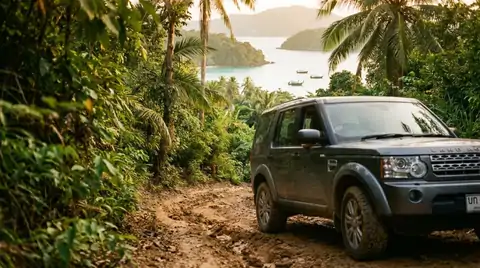
Green after rain is the main visual difference of the season. The reserve, the waterfalls and the roads through the plantations look nothing like they do in the dry months, and by car those points can be covered in a single day.
The viewpoints are empty then, and you can arrive at any hour rather than around the crowds. The one condition is to watch the sky: after a downpour the cloud closes the view over the bays.
The markets and cafes work at a calmer pace, parking near them is free, and the morning on the island stops being a race. For anyone who came here specifically to drive, the low season is the best time on the road.
Rental availability is the quiet bonus. Cars that disappear for months in the high season are simply there, and a class you actually want is far easier to get.
If you are coming in the wetter months, tell us where you are staying and we will suggest something that copes with a flooded junction. Message us on WhatsApp with your dates, or Telegram if you prefer, and mention whether you plan to drive to the waterfalls.
Cars for this trip
See all →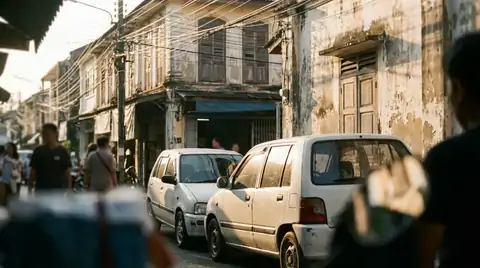
Common questions
Is it worth renting a car in Phuket during the low season?
It is one of the better times to drive here, because the passes and beach roads clear and parking stops being a problem. The trade off is weather: short heavy downpours that change the surface for half an hour at a time.
How should I drive when a downpour starts?
Take speed off immediately, because the first minutes are the most slippery as dust and oil lift off the hot tarmac. If the rain becomes a wall of water, pull into a forecourt and wait twenty minutes rather than driving blind.
Can I drive through a flooded section of road?
You should not, because the depth cannot be judged by eye and water damage to the engine is treated as driver error rather than an insured event. Turn round or wait, since the water usually drains within the hour.
Are the roads dangerous in the rainy months?
They are ordinary roads driven at ordinary speeds, and the risk comes from treating a wet surface like a dry one. Dipped headlights, a bigger gap and earlier braking on descents cover almost all of it.
What is worth seeing on the island in this period?
The waterfalls, the reserve and the roads through the plantations look completely different once the greenery has come back. The viewpoints are empty too, though after a downpour the cloud can close the view over the bays entirely.
Write to us — we will find the right car
We answer in chat: no forms, no phone calls, no waiting on hold.