
Driving to Chalong Pier, Phuket
The pier in the south of the island is the main departure point for boats, and the approach to it comes down to one thing: early in the morning everybody drives there at once, and the area by the water was not built for everybody. The road from the Chalong roundabout is short and simple, and the difficulty starts in the last few hundred metres.
Updated 13 September 2026
- Delivery to your hotel and the airport
- Answers in chat, no phone calls
- We go through the insurance before you sign
The approach and the morning hour
A straight road runs from the Chalong junction down to the water and there is no way to get lost on it. During the day it is clear and takes a few minutes. Early in the morning the picture is different: a column of minibuses, taxis and private cars moves along it, and the last section proceeds at walking pace.
Closer to the water the road narrows, parked cars start appearing along the edges, and people with bags and equipment walk between them. Speed here is dictated by the situation rather than by signs: you have to be able to stop instantly.
What happens on the yard itself
The pier is a workplace. Loaded pickups turn on the yard, boat trailers manoeuvre, people walk about in gear. A visitor's car is the odd element in that picture, and parking it in the middle of a driving lane is a guaranteed way to be boxed in.
Towards lunchtime and in the evening everything changes: the yard empties, spaces appear and the movement becomes calm. If your task is not to sail but simply to look at the bay, that is the time to come.
What that means for the car
The road is surfaced right up to the yard and clearance is irrelevant. Something else matters: part of the surface near the water is concrete slabs with steps between them and puddles that stand for a long time after rain, because there is almost no fall towards the sea.
Salt is a permanent factor. A car that has stood by the water for a day is covered with a fine film, and it is particularly noticeable on the glass. Wipers on dry glass like that leave scratches for the rest of that windscreen's life, so use the washer first and the blades second.
If you leave the car for the whole day
A boat trip takes a full day of daylight, and the car stands in the sun by the water for all of it. The cabin is scorching by the time you return, and anything left on the dashboard is deformed by evening. Clear the dashboard before you go, not afterwards.
Do not leave valuables in the car at all. The yard has people crossing it constantly and nobody watches other people's vehicles: this is a transport hub rather than a guarded car park.
ImportantA car parked in a driving lane of the working yard blocks pickups with trailers, and the matter is dealt with without you, because by then you are at sea. Coming back to a car hemmed in by equipment, or moved, or with a note under the wiper, spoils the whole day. Park only at the edge and only where other visitors' cars are clearly standing.
Where to park
The main guide is the rows of visitor cars around the perimeter. They are there for a reason: those are the places that do not obstruct working traffic, and you should follow the same logic rather than hunt for something closer to the water.
There are spaces along the access road as well, and in the morning they are the first to go. The one thing to check is whether you are blocking somebody's entrance, because over a day the situation there will certainly change.
Nose out
On a full morning yard, turning round takes as long as the drive from the roundabout. Park so that you can leave forwards from the start, particularly as you will come back tired and close to sunstruck.
There is shade at the edges under the trees. It is worth the extra hundred metres: the difference between a car in shade and a car on open concrete by the sea after a day of standing is enormous.
The morning departure step by step
Leave with time in hand. The drive from the roundabout takes minutes, while finding a space and walking to the right berth takes noticeably longer, especially the first time. Missing a boat because of parking is an ordinary story precisely here.
Drop passengers and bags first, before looking for a space. That way you are not carrying luggage across the whole yard and not holding up the column behind you while unloading the boot in a driving lane.
After you come back
In the evening the yard is freer, while you are tired and sunburnt. A couple of minutes with the doors open before you start is essential, because getting into a scorching cabin after a day on the water and driving straight through the Chalong roundabout is a poor combination.
The drive back to the junction in the evening goes with the general traffic. There are few places to turn on that road, so choose your direction in advance rather than finding yourself in the wrong lane.
Coming here for something other than a boat
The afternoon. The yard is nearly empty, cars park freely, the bay full of boats looks calm and nobody is in a hurry. For a short stop on a route around the south of the island that is the right time.
There are fuel stations and ordinary town facilities near the pier, which makes it convenient for closing technical matters before heading south or up towards the hills.
The one thing to avoid at any hour is trying to drive into the working part of the yard. It is always working, regardless of how many people are around, and the movement there follows cargo rather than guests.
If your plan includes an early boat, ask for the car to be delivered the evening before. Message us on WhatsApp with your dates and your hotel, or Telegram if you prefer, and say what time you need to set off.
TipDrop people and bags at the entrance and look for a space with an empty car. In the morning that saves ten minutes and removes the need to carry luggage across the whole yard between manoeuvring pickups.
Cars for this trip
See all →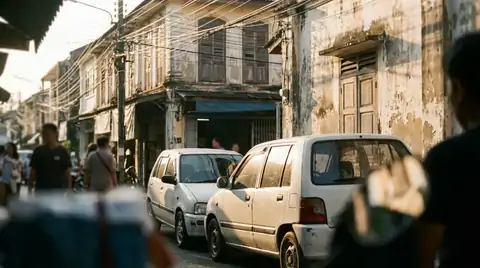

Common questions
How do I drive to Chalong pier?
A straight road leads to the water from the Chalong junction and the drive takes a few minutes with no chance of getting lost. The only difficulty is the early morning hour, when minibuses, taxis and private cars all use it at once.
Is there parking at Chalong pier?
Visitor cars park around the perimeter of the yard and along the access road. The central part is a working area where pickups and boat trailers manoeuvre, and a car left in a lane there blocks movement for the whole day.
Can I leave the car at the pier all day?
You can, and everybody heading out to sea for the day does. The yard is a through route and unguarded, so valuables come with you or go in the boot, and the dashboard is cleared, since everything on it deforms in a day of sun by the water.
What time should I leave for a morning boat?
With a margin over the meeting time. The drive from the roundabout is short, but finding a space and walking to the right berth during the morning peak takes considerably longer, especially on a first visit.
How do I deal with salt film on the glass?
Wet the glass with the washer first and only then switch the wipers on. Dry salt under a blade works as an abrasive and leaves scratches that never go away and become a question at the return handover.
Is there shade at the pier car park?
There is some at the edges under the trees, and it is worth walking the extra distance for. After a full day the difference between a car in shade and one on open concrete beside the sea is considerable.
Write to us — we will find the right car
We answer in chat: no forms, no phone calls, no waiting on hold.