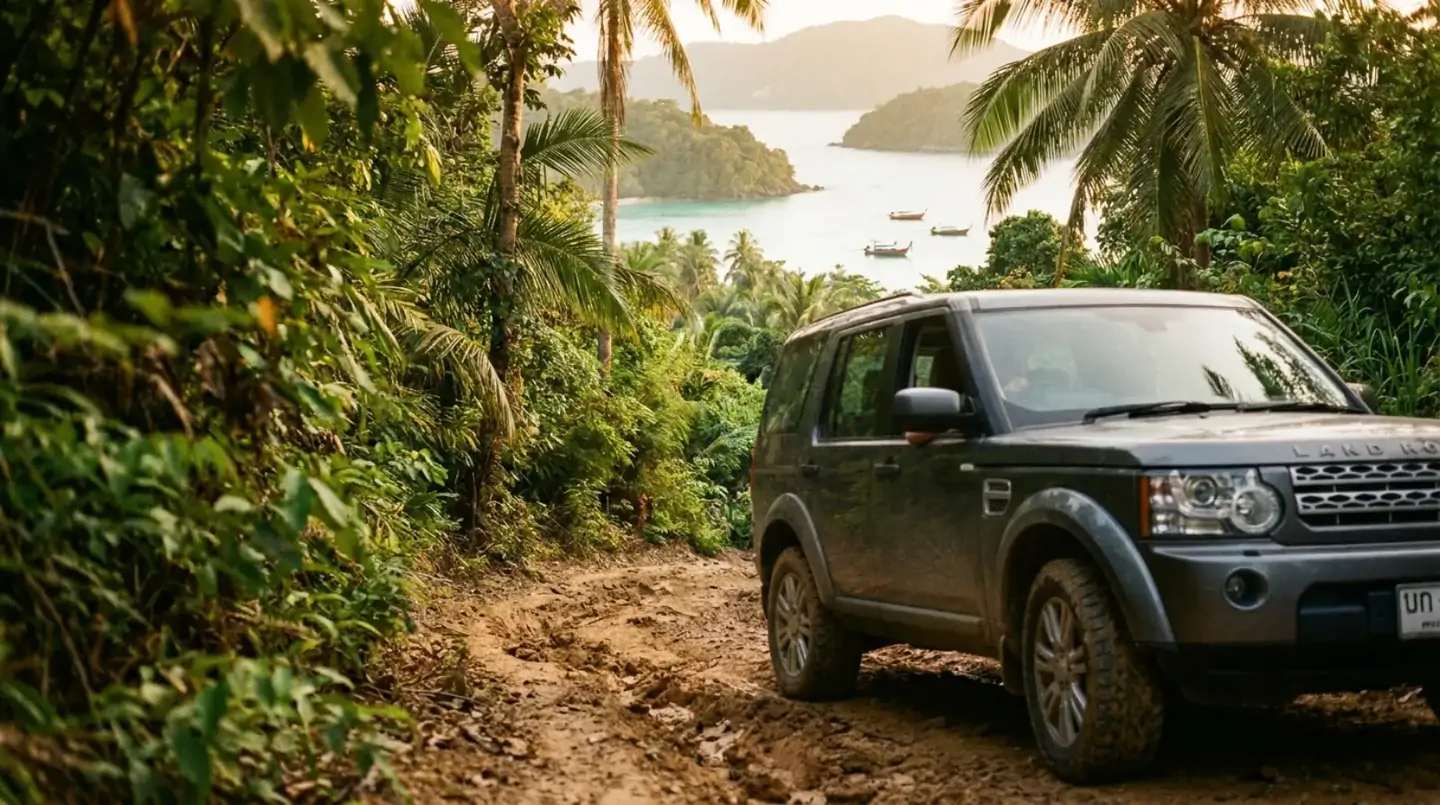
Scooter Rental at Nai Yang, Phuket
Nai Yang is arranged more conveniently than most beaches on the island: the cafes, shops and rental desks stand along the promenade rather than a couple of kilometres inland, so a bike here is taken for trips out of the district rather than around it. There is exactly one inconvenience, and it is the way out, which runs through the airport interchanges where traffic is dense and lane changes happen quickly.
Updated 13 September 2026
- Delivery to your hotel and the airport
- Answers in chat, no phone calls
- We go through the insurance before you sign
What makes Nai Yang easy on two wheels
Everything is gathered on one line: the promenade with its cafes, the street of shops and workshops behind it, and then the way out to the trunk road. You barely need to ride inside the district at all, which means the bike is a tool for something else. Bang Tao is twenty minutes away, Thalang and its waterfalls half an hour, Phuket Town about an hour at a calm pace.
Aeroplanes and the road beneath them
The southern end of the beach runs up against the end of the runway, and the approach passes directly over the water. The road along that stretch is narrow, with cars parked tight against the verge and people crossing it without looking, because they are looking up. Ride at walking pace there; it is not a place for a spirited run.
The second consequence of living beside an airport is that the traffic comes in predictable waves. When several aircraft land or leave in succession, the approach road and the roundabout at the terminals seize up. Riding out during those windows is easier on a bike than in a car, but threading between taxis in narrow gaps is not a beginner's exercise.
What that means for the machine
The district is nearly flat and there are no serious climbs, so any engine size will do. The real load starts when you leave: the road to Patong crosses a pass, and the approaches to Nai Thon and Layan are short hill roads with gradients and blind corners.
Low season wind changes how the bike steers
From May to October the south westerly blows straight onto this shore, and on the open parts of the promenade a side gust visibly shifts a light scooter. Keep both hands on the bars and do not build speed on the straight beside the water, because the gust usually catches you in the gap between two trees.
Sand from the beach drifts onto the asphalt at every access to the water. Wet sand after a downpour is worse than dry, because it smears into a film. Brake before those patches rather than on them, and do not add throttle while the bike is leaned over.
ImportantThe rainy season brings rip currents and red flags to this shore, and the ban on swimming during them is not decoration. None of that concerns the bike, but arriving and staying out of the water is the correct decision, not a spoiled day.
Where to park
A line of casuarina trees runs along the promenade, and underneath them are ready made places for two wheels. Shade matters more here than being close to the water: an hour in the open sun heats the seat to the point where you sit on it through a towel. Local riders park under the trees and walk the last part to the sand.
The park post and the evening
Some of the entrances into the Sirinat area go through a barrier with an attendant. During the day that is a formality; in the evening the area is closed, and a bike left inside comes back to you only in the morning. If you are planning to stay for sunset, work out in advance which exit you will use.
The street of shops is narrow, and double parking blocks it instantly. That produces an immediate argument with delivery riders and taxis trying to get through. Put the bike in a gap between other bikes along the kerb, and there are usually more of those gaps than a first glance suggests.
- Park under the casuarinas rather than close to the water
- Do not leave the bike inside the park area for the night
- No double parking on the shop street, even briefly
- A towel on the seat if you must park in the open
Where a beginner should not ride yet
The airport roundabout is not the place for a first ride out. The exits come one after another, taxis change lanes without indicating, and you are riding on the unfamiliar side of the road. Give yourself a couple of days on the streets inside the district before going near it.
The hill road to Nai Thon is beautiful but narrow, with a drop on the seaward side. After rain there is clay and leaf litter on it and the verge crumbles away. Make that trip for the first time in daylight, in dry weather, and without a passenger behind you.
Riding around the district at night is possible, but the lighting along the beach road is weak. Dogs come onto the asphalt precisely after dark and you will not see them from a distance. Check the headlight and the stop lamp at the handover, because there is nowhere to do it afterwards.
TipIf you are flying out in the morning, ride the whole route to the terminal the evening before. In daylight it is obvious, and in the dark the interchange by the airport looks like a different place entirely.
Documents, helmet and the handover
A bike requires category A: your national licence plus an International Driving Permit carrying the motorcycle entry. The entry is not checked every day, but it is what decides whether the insurance works if something happens. The fines for riding without the right category do not go anywhere either.
Helmets go on rider and passenger both, and near the airport approaches that rule is enforced noticeably more strictly than on quiet streets. Ask for the second helmet at the handover, along with the question of whether it counts as part of the deposit.
A five minute handover
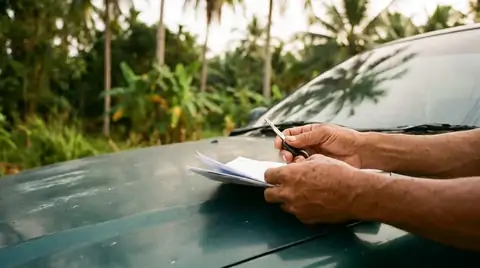
Walk around the bike with your phone and film a full circle, then the scratches on the plastic and the state of the tyres separately. Start it and listen to the engine at idle. Check the brakes, the indicators and the stop lamp by pressing the pedal with the ignition on. Those five minutes settle any argument about the deposit when you bring it back.
Delivery to your hotel at Nai Yang is simple, and it is the better option if you are arriving on a late flight. Message us on WhatsApp with your dates and the name of your hotel, or Telegram if you prefer, and say whether you need the bike waiting on arrival day.
Cars for this trip
See all →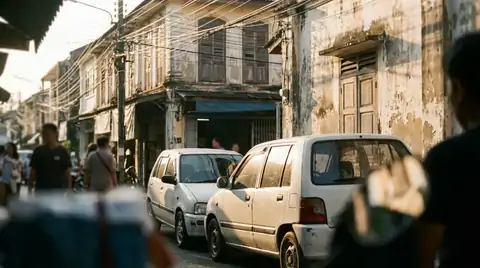

Common questions
How close is Nai Yang to the airport?
Closer than any other beach district, at roughly five minutes to the terminal approach road. That makes it convenient for early departures, though the local roads are busier than at the neighbouring beaches.
Do I need a powerful bike for Nai Yang?
Inside the district the ground is flat and the simplest scooter is enough. Engine size starts to matter on the way out, since the pass towards Patong and the hill road to Nai Thon are hard work for a small motor with a passenger.
Where should I leave the bike near the beach?
Under the casuarina trees along the promenade, which is where almost every local parks. Shade is worth more than proximity to the water, because a seat in the open sun becomes too hot to sit on.
Is the wind on this shore dangerous?
From May to October the south westerly blows straight onto the beach and side gusts move a light scooter on the open sections. You can ride in it, but keep both hands on the bars and do not build speed along the water.
Can I leave the bike inside the park overnight?
No, the entrances into the Sirinat area are closed in the evening. A machine left inside comes back to you only after the post opens in the morning, which is worth remembering when you plan to stay for sunset.
What should I check when I collect the bike?
Film a circle around it, record the scratches and the tyres separately, start the engine and test the brakes and indicators. That handover takes five minutes and removes almost every future argument about the deposit.
Write to us — we will find the right car
We answer in chat: no forms, no phone calls, no waiting on hold.