
Where to Park in Patong, Phuket
In Patong a car goes either into the multi storey car parks of the shopping centres and hotels or onto a marked paid area by the beach, and only those work reliably. Every other option, a verge, a side lane, a patch of shade beside somebody's fence, ends sooner or later with a removal truck or a blocked exit.
Updated 13 September 2026
- Delivery to your hotel and the airport
- Answers in chat, no phone calls
- We go through the insurance before you sign
How Patong works for a car
The district is squeezed between the sea and the hills, and every street in it is short. The promenade runs along the beach, the main shopping street runs parallel, and between them sits a grid of narrow passages, most of them one way. There are more cars here than there is room, all year round.
In the evening pedestrians are added, walking in the carriageway because the pavements are taken by stalls, along with a dense flow of scooters. Speed in that mixture drops to walking pace, and ten minutes of driving becomes half an hour.
From which follows the main rule of the district: arrive earlier than you need to, and park once for the whole evening. Re parking in Patong is lost time.
Where not to drive at all
Into the lanes between the main street and the promenade during the evening hours. There is nowhere to turn round, reversing among scooters is dangerous, and there are no spaces anyway.
The morning looks completely different: half empty streets, spaces almost everywhere, and the promenade crossed in a couple of minutes. People who come to Patong for the beach in the morning never meet the parking problem at all, because it arrives with the sunset.
What it means for the car
Size decides. A compact car parks in Patong where a minivan simply will not fit, and it takes the narrow streets without stress. Anyone planning evenings in this district should think about that when choosing a class.
A covered car park wins on more than security. A cabin that has stood all day on an open area by the beach greets you with a scorching steering wheel, and the air conditioning takes its time to catch up.
Salt and sand. A car parked right by the promenade collects a film within hours, and it shows on dark paintwork. If you are leaving it for a long time, choose somewhere slightly further from the water.
Things in the cabin
A bag left in view is an invitation. Anything valuable goes into the boot in advance, not in front of passers by in the car park itself.
The evening routine that works
The scheme used by everybody who drives here regularly: pull into a multi storey car park at a shopping centre or a hotel, leave the car and walk. The district is compact, and everything people come here for fits into a stroll.
Note the level and the row, or photograph the pillar. The levels look identical, and after a long evening the search for your own car is its own small ordeal.
Check the closing time of the car park before you walk away. Some of them lock up earlier than the bars do, and finding that out at midnight is not the discovery you want.
If you are driving and planning a bar
Then the car stays at your hotel and you come into Patong by taxi. Driving after alcohol is out of the question, since the police check drivers in the evenings and the insurance does not work in a collision in that condition.
ImportantRemoval trucks work regularly in Patong and cars are taken without warning. On top of the penalty the rental company bills you for recovering the car from the compound and for the staff time spent, which comes out noticeably higher than any paid car park.
Where exactly to look for a space
The district's shopping centres offer the largest and most convenient car parks: several levels, security and an exit straight onto a main street. From them it is a short walk to the promenade, and that is the best option for an evening.
There are marked paid areas by the beach. They suit a daytime swim and are usually free in the morning, filling up by lunchtime. Payment is most often in cash, so keep small notes ready.
Hotels let spaces on their own car parks, and that works if you have come for a restaurant or to visit somebody. It is worth asking the security staff at the entrance directly.
North and south of the centre
Towards the edges of Patong the streets are wider and calmer. Many people park there and walk fifteen minutes along the promenade, which is faster than circling the centre.
There is a seasonal difference as well. In high season even the outlying areas fill, and by evening cars are being left on the climb towards the hills. In low season the district breathes more easily and spaces are found closer to the water.
How not to lose the deposit over small things
Car park scratches are the most common complaint at handover. In a tight row neighbours open their doors without looking, and scooters squeeze between cars with no margin. An end space by a wall or a pillar is safer than the middle of a row.
Another cost people learn about late is removal because a street was closed for an event. Fairs and races take place in the district regularly, and a car left on the route the night before is taken away early in the morning while its driver sleeps.
Camera fines and parking notices reach the rental company with a delay and come out of the deposit after you have flown home. That is why paying for parking and not gambling on the kerb is better value than it feels at the time.
And one last small thing: photograph the car when you leave it overnight somewhere unfamiliar. A dated picture removes half the questions later.
If your evenings will be spent in Patong, say so when booking and we will suggest a size that fits the streets. Message us on WhatsApp with your dates and hotel, or Telegram if that suits you better.
Cars for this trip
See all →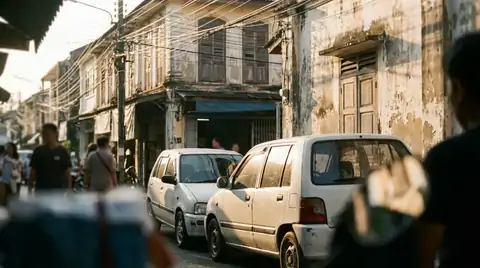
Common questions
Where can I actually park in Patong in the evening?
In the multi storey car parks of the shopping centres and hotels, which have security, a roof and an exit onto a main street. Street spaces are gone by dark, and looking for one takes longer than walking in from a car park would.
What do the red and white kerb stripes mean?
No parking at any time of day, and in Patong that is enforced with removal trucks rather than warnings. Red and yellow means you may stop only long enough to let a passenger out.
What happens if my rental car is towed?
You pay the penalty, and on top of that the rental company charges for recovering the car from the compound and for the staff time it took. The total comfortably exceeds what a paid car park would have cost for the whole week.
Is a big car a problem in Patong?
It is, because the lanes are narrow, most are one way and the spaces are tight. If your evenings will be spent in this district, a compact car makes the whole week easier.
Can I park by the beach during the day?
Yes, there are marked paid areas that are usually free in the morning and full by lunchtime. Payment is normally cash, so keep small notes in the car before you set off.
Write to us — we will find the right car
We answer in chat: no forms, no phone calls, no waiting on hold.