
Phuket Markets by Car: Where to Go
The markets of Phuket are scattered across the whole island, and by car they open up differently: you arrive at opening time, load a box of fruit into the boot and leave while the tour coaches are only starting to gather. The one thing that needs preparation is parking, because at most markets it is informal and fills within half an hour.
Updated 13 September 2026
- Delivery to your hotel and the airport
- Answers in chat, no phone calls
- We go through the insurance before you sign
Which markets are worth the drive
The food markets in Phuket Town and around Chalong are the base: fruit, greens, fish, spices. Go in the morning, when the produce is fresh and the aisles are not yet blocked by delivery vehicles.
Night markets are a different format. The largest works near Phuket Town at weekends, the others are scattered across the districts and open towards dusk. People eat there rather than stock up, and the main difficulty is arriving before the parking fills.
Markets in the north and east
Thalang and the east coast give a calmer picture: local markets without the tourist markup and with sensible approaches. By car those are the most comfortable stops, both for parking and for traffic.
The fish rows at Rawai deserve their own mention. Go before lunch, because later the choice is smaller and the sun over an open car park does its work on whatever is in the boot.
What that means for the car
Market approaches are almost always narrow two way streets with people walking along them and delivery bikes parked on them. A long car loses here: there is nowhere to turn round, and reversing out happens past pedestrians.
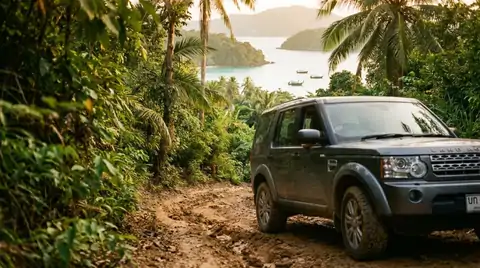
The surface at the entrances is often broken, and after a downpour water stands in the ruts. A low bumper catches on an approach like that, so enter slowly and at an angle rather than straight on.
The boot and the heat
Fruit in a boot in the sun spoils within a couple of hours. If another drive follows the market, park in shade or carry a cool bag, which is a practical necessity at midday rather than a luxury.
Fish and seafood need their own packaging. The smell lingers in the cabin of a rental car, and a complaint about cleanliness at the return comes up regularly because of exactly that.
Where to park at a market
The larger markets have organised areas, but they fill quickly. The rule is simple: arrive at opening time and the parking question disappears by itself. By the middle of the day cars are standing along the approach streets, and getting out of there is harder than getting in.
A red and white kerb means a ban around the clock, and at markets that is enforced strictly, because the narrow streets have to stay passable for deliveries. Removal operates in such places regularly.
Night markets
At the evening markets the parking is informal and the rows form themselves. Park so that you cannot be blocked in, because waiting to get out of the back row after closing sometimes takes longer than the meal did.
Remember a landmark next to the car. In the evening the identical rows and the crowd turn the search into an expedition of its own.
ImportantDelivery bikes work the market entrances constantly and pull out of the lanes without stopping. Keep to walking pace on the approach streets and do not assume you will be let through: priority here is set by practice rather than by markings. Check the mirrors twice before reversing out.
Building a day around the markets
The best scheme is to start with a food market in the morning, drop the shopping at home and only then drive on around the island. Carrying fruit and fish in a hot boot all day makes no sense.
A second run happens in the evening if a night market appeals. The car works differently then: you arrive at opening, park calmly and walk off, instead of circling a full car park.
Linking the stops
Markets combine well with other errands by geography. Chalong pairs with the pier and the southern beaches, Thalang with the northern sights and the reserve, the town with the shopping centres and the old streets.
If a large shop is the plan, start at the furthest market and work back towards home. That way the goods spend the least possible time in the boot.
What to know about buying
Cash works better than a card at a market, and small notes are more useful than large ones. Terminals are not everywhere, and getting change at the entrance costs time.
Bring your own bag. Market bags are thin and a box of fruit does not always survive the walk to the car in one, while a sturdy bag also settles the question of keeping the boot clean.
Bargaining on the food rows is normal practice, but the conversation happens calmly and with a smile. After that it is not persistence that decides the outcome but whether you are buying one bunch or a whole box.
If you plan a weekly market run, ask for a car with a boot to match. Message us on WhatsApp with your dates, or Telegram if you prefer, and say what you will be carrying.
Cars for this trip
See all →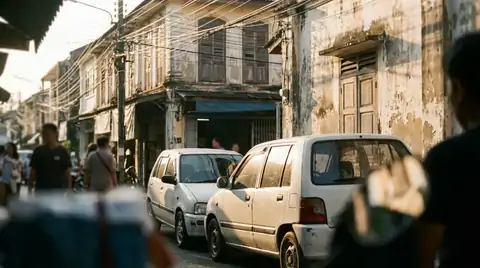
Common questions
What time should I drive to a market on Phuket?
To the food markets early in the morning, at opening, when the produce is fresh and the parking is still free. Night markets open at dusk and it is worth arriving a little before, because the parking fills faster than the market itself.
Where do I park at Phuket markets?
The larger markets have organised areas, but they fill within the first half hour of trading. After that cars stand along the approach streets, and leaving from there is harder than arriving.
Can I get fruit home in the heat?
Over a short distance yes, but in a boot in the sun it loses condition within a couple of hours. A cool bag and a stop at home straight after the market solve the problem completely.
Which car is better for market trips?
A short one, because the approaches are narrow, there is nowhere to turn round and you often reverse out past pedestrians. The boot still needs to take a box of fruit rather than only a bag.
Do I need cash at the island's markets?
Cash works everywhere while card terminals are not universal among the sellers. Small notes are more convenient than large ones, since getting change at the entrance takes time you would rather spend shopping.
Can I park on the kerb beside a market?
Only where there is no red and white marking, which means a ban around the clock. At markets that rule is enforced strictly, because the narrow streets have to stay passable for deliveries.
Write to us — we will find the right car
We answer in chat: no forms, no phone calls, no waiting on hold.