
Phuket to Pattaya by Car
Between Phuket and Pattaya lie roughly a thousand kilometres of good roads across the mainland, and that distance is covered in one daylight run only with an early start and two people sharing the wheel. Everyone else splits it into two days with a night somewhere around Chumphon or Hua Hin.
Updated 13 September 2026
- Delivery to your hotel and the airport
- Answers in chat, no phone calls
- We go through the insurance before you sign
What the road is and how long it really takes
The logic of the route is simple: off the island over the bridge, north along highway 4 up the isthmus, then east towards the gulf and down to Pattaya. The signs are large and duplicated in Latin script, the markings are maintained. Getting lost on a road like that is harder than getting lost inside Phuket itself.
The journey takes longer than the navigation app calculates. It draws pure driving time, while on the road there will be fuel stops, food, police posts and limits through villages where the traffic slows to the speed of the first lorry. In practice it becomes a long day at the wheel even for people used to long distances.
Why one day is a poor idea
By evening you are in the dark on an unfamiliar road with left hand traffic, overtaking coaches and motorcycles without lights on the verge. Fatigue works harder here than at home: heat, air conditioning and a monotonous straight put you to sleep faster than you would expect.
Two shorter days also change what the trip is. Instead of enduring a thousand kilometres you get an evening somewhere on the isthmus, which is a part of the country most visitors never see at all.
What that means for the car
For a road like this you take a car with something in reserve. A small engine will complete a thousand kilometres, but it runs out of pull when overtaking loaded lorries on two lane sections, and the overtake stretches to a dangerous length. A mid size saloon or a crossover is calmer: quieter on the highway and able to hold speed on the climbs of the isthmus.
The air conditioning works all day without a break, and that is a load in itself. Before setting off it is worth confirming that it cools properly and that the coolant level is right, because on a long run problems surface precisely in the heat.
Tyres and the spare. Punctures on mainland roads come from metal debris on the verge, and a workshop can be found along the way, but it costs time. Check that there is a spare wheel and a jack in the boot, not only a can of sealant.
Fuel and stations
Pumps are frequent, and on the large highways they come with a shop and a toilet. Fill the tank at a convenient stop rather than when the warning light comes on, because deep in the isthmus the gaps between stations are longer than you are used to.
The agreement, boundaries and fines
The main question about leaving the island is settled before you start. Many rentals limit the territory in which the car may be used, and a mainland trip without agreement means the insurance does not apply on the mainland. Get consent in advance and have it noted in the agreement rather than as words in a chat.
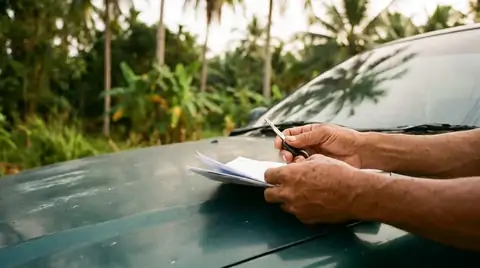
Police posts along the way are routine, particularly at province boundaries. They stop cars selectively and look at the licence and the documents for the vehicle. Keep the International Driving Permit together with your home licence, because without it the conversation becomes longer and more expensive.
Camera fines on the highways go to the owner, which means the rental. They are taken from the deposit, sometimes weeks after you return the car, so hold the speed shown on the signs rather than the speed of the traffic around you.
- Written permission to leave the island, in the agreement
- Both licences carried together, not in the hotel safe
- Speed by the signs, since camera fines reach the deposit
- Spare wheel and jack checked before departure
- Small notes in cash for toll gates
ImportantDriving to the mainland without that note in the rental agreement is the most expensive way to save time. In an accident outside the permitted territory the insurer declines, and the repair of the car falls on you in full.
Where to sleep and how to divide the drive
The sensible midpoint is the Chumphon area: from there the second half of the road remains, and it is easier than the first. Anyone leaving late stops closer to Hua Hin, which makes the second day short and gets you in before dark.
Look for the night's accommodation in advance and on the highway rather than in a town centre, because leaving a resort centre in the morning takes longer. Roadside hotels beside the large fuel stations look modest, but the car stands under your window and under watch.
Plan the return the same way. Coming back to Phuket on the day you fly is a common mistake, because any delay on the road turns the drive into a race to the airport.
Is it worth driving yourself
People drive it themselves when they need the car both in Pattaya and along the way: stops at temples, markets and the beaches of the isthmus add up to a trip of their own. Then there is luggage, which does not have to be dragged through an airport.
For anyone who only wants Pattaya, the drive gives little: two days at the wheel against an hour in the air. In that case the car is taken on arrival, and the Phuket rental is closed before the flight.
There is a third option, which is to drive as far as the isthmus, look at Khao Lak, Ranong or Hua Hin, and turn back. The road there is beautiful and calm and the distances are honest, and the car earns its keep the whole way.
If you do want the car for a mainland run, say so when you book so the paperwork covers it. Message us on WhatsApp with your dates and the destination, or Telegram if you prefer, and we will confirm what the agreement allows.
Cars for this trip
See all →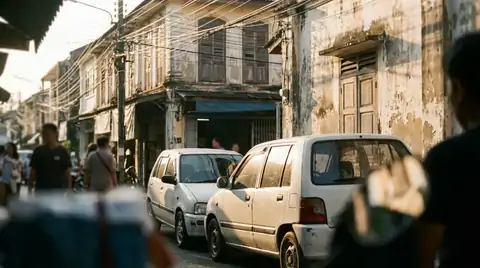

Common questions
How long does it take to drive from Phuket to Pattaya?
The distance is about a thousand kilometres across the mainland, and the pure driving time takes almost the whole of a daylight day. With stops for food, fuel and police posts the drive is normally split into two days with a night on the way.
What is the road quality like on this route?
Most of the way runs on wide highways with maintained markings and large signs duplicated in Latin script. The difficulty is not the surface but the length of the run and the sections through villages where the traffic slows.
Can I take a rental car off Phuket?
Usually yes, but the territory of use is written into the agreement. Leaving for the mainland is agreed in advance and recorded in writing, otherwise the insurance does not apply beyond the island.
Where should I stop for the night on the way?
The convenient midpoint is around Chumphon, and after a late departure people stop closer to Hua Hin. Book ahead and choose somewhere by the highway rather than in a town centre, so the morning does not start with traffic.
Are there toll sections on the road to Pattaya?
Closer to the eastern coast and on the approaches to the capital area there are toll interchanges and bridges, paid at the gate. Keep small notes in cash with you, because card payment is not accepted at every point.
Is flying and renting on arrival the better option?
For a trip that is only about Pattaya it usually is, since two days of driving replaces an hour in the air. Driving makes sense when the stops along the way are part of the plan rather than an obstacle to it.
Write to us — we will find the right car
We answer in chat: no forms, no phone calls, no waiting on hold.