
Stops on the Drive from Phuket to Khao Lak
The hour and a half to Khao Lak runs along one straight road, and every interesting turning off it goes left, towards the sea: Natai beach just past the bridge, the turtle shore at Thai Mueang, the Thap Lamu pier and the memorial point at Ban Nam Khem. There is no sense in planning this route as one continuous run, because the resort strip is spread out along the highway and you will be turning off more than once anyway.
Updated 13 September 2026
- Delivery to your hotel and the airport
- Answers in chat, no phone calls
- We go through the insurance before you sign
What you pass and in what order
The first turning to the sea appears almost immediately after the bridge: Natai beach runs as a long even strip, and the road to it leaves the highway on the left through a village. It is quiet, there are few cars on the shore and the sand is firm. As a first stop after the island it works best of all, because you have only just crossed the bridge and this is exactly where you want to stretch.
Further along comes Thai Mueang with its national park on the shore. The turning is signed, the road to the car park is surfaced and the area is large. The beach there is long and empty, and entry to the park is handled at a barrier where the queue of cars is usually short.
Thap Lamu pier, timed for the morning
A short surfaced road leads from the highway to the pier through a military area, and the signs there are unambiguous: low speed, stopping only in marked places. Early in the morning the pier is packed with the cars of people who have left for the islands, and there is almost no space by the water. In the afternoon and evening it is the opposite, and the place is empty.
Ban Nam Khem at the northern end of the strip is a memorial point. The road to it leaves the highway into the village, narrow, with frequent driveways. Keep to walking pace there, not out of politeness but because bikes come out from behind the fences regularly.
What it means for the car
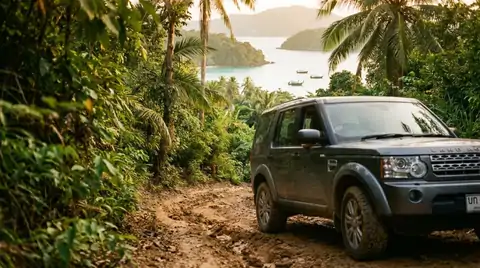
The highway on this route is easy; the approaches to the beaches are not. The last hundred or two hundred metres to the water almost everywhere become a sandy rutted track, and after rain it holds a car badly. This is where people get stuck most often, and not on any kind of off road terrain: the wheels simply dig into loose sand right at the edge.
The rule is single and simple: do not drive onto sand. Leave the car on firm surface where the tarmac or compacted ground ends and walk the last stretch. A crossover gives you clearance, but most rental cars have no all wheel drive, and loose sand holds them just as firmly.
Salt and the windscreen
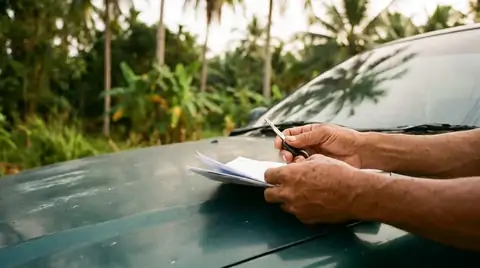
Parking twenty metres from the surf means salt spray on the paint and on the glass. That is not critical for one trip, but wipers dragged across dry salted glass leave scratches, so use the washers first and the blades second. A cloudy scratched windscreen at handover is a reason to discuss the deposit, and that conversation costs time for no good reason.
Rinse the car afterwards if you spent a day parked by the water. It is a small thing on a single trip and a genuine one on a long rental.
ImportantDriving onto sand and then calling a recovery truck is the most common misfortune on this route. Rental insurance normally does not cover it: this is not a collision but driver action, and pulling the car out is paid for separately. Testing the edge of the firm ground with a foot is cheaper than testing it with a wheel.
Where to stand at each point
At Natai cars park along the road before the path onto the beach. The verge there is narrow, and you have to stand so as not to block oncoming traffic: the road is single lane in each direction, and one badly abandoned car paralyses the whole village.
At the national park the area is marked and there is shade around the edges. That shade is worth an extra hundred metres of walking, because a car left two hours in open sun then takes fifteen minutes before anybody can sit in it comfortably.
The resort strip and its trap
The twenty kilometres of Khao Lak along the highway are a chain of turnings, and almost every one looks the same. Arriving at a specific hotel or beach, navigate by the turning in the app rather than by the view from the road. Miss it and you will not turn round straight away, because U turns on this highway are few and the nearest may be a couple of kilometres on.
There is enough space inside the strip during the day, and noticeably less in the evening near the restaurant blocks. There it becomes ordinary kerbside town parking with the same colour rules, and red and white means a prohibition exactly as it does in Phuket Town.
Fuel, water and a technical pause
The large fuel stations stand at Khok Kloi and Thai Mueang, and there are more along the resort strip, though smaller and further apart. For ninety kilometres that is plenty, and a full tank before leaving the island closes the question until you are back.
The station at Thai Mueang works well as the midpoint: shade, water, a toilet and a flat area. An hour and a half at the wheel is no marathon, but it is precisely on short distances that drivers stop pausing at all and arrive already tired.
One more feature of this route: between the turnings the highway looks empty and invites speed. Speed enforcement appears on this stretch regularly, and fines under a rental agreement still reach the renter, simply with a delay and through the company.
Carry cash for the park entry and any parking fees. Card terminals are not part of the arrangement at a barrier in the middle of a coastal road.
When to cut the stops down
Rain changes this route more than anything else. The unsurfaced approaches to the beaches turn to mush after half an hour of downpour, and the water stands there for a long time because the ground is flat and it has nowhere to drain. In that weather only the points with tarmac all the way to the car park stay on the list.
The second limit is time. An hour and a half each way plus four stops adds up to a full day, and the drive home along highway 4 in darkness is unlit, with bikes on the verge and occasional pedestrians in dark clothing.
If the trip is a single day and there are children in the car, take two points rather than four. The purpose of the route is not to tick everything off but to be back on Phuket in daylight and without stress at the bridge.
Plan the return from Khao Lak before sunset. The Sarasin bridge collects dense traffic in the evening, and the hour saved at the beach is spent on the approach to the island.
If you want the trip planned around your dates, tell us. Write to us on WhatsApp with the day you have in mind, or Telegram if that is easier, and mention whether children are travelling.
TipPlan the return leg to leave Khao Lak before sunset. The Sarasin bridge gathers dense traffic in the evening, and the hour you saved at the beach goes straight into the approach to the island.
Cars for this trip
See all →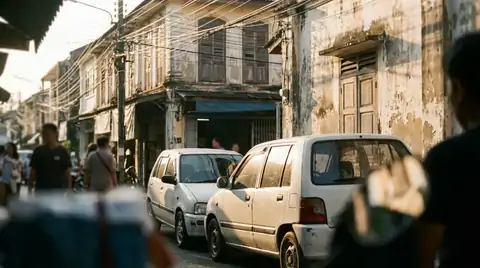
Common questions
How long is the drive from Phuket to Khao Lak?
About ninety kilometres from the Sarasin bridge, which is roughly an hour and a half at a relaxed pace. Add time for the turnings to the beaches, because the resort strip is spread over twenty kilometres of highway.
Can I drive onto the beach at Natai or Thai Mueang?
No, and this is the route where rental cars get stuck most often. Leave the car where the firm surface ends and walk the last hundred metres, because loose sand holds a two wheel drive car completely.
Is a crossover needed for this trip?
Not for the highway, which is easy, but the clearance helps on the rough final approaches to some beaches. It does not make sand passable, since most rental cars have no all wheel drive whatever they look like.
Where should I refuel on the way?
At Khok Kloi or Thai Mueang, both of which sit on the highway with room to stop properly. A full tank before leaving the island is enough for the whole round trip in any case.
How many stops fit into a day trip?
Two are comfortable, four make it a long day that ends with an unlit drive home. With children, cutting the list is the better decision, because the return over the bridge in the dark is the tiring part.
Write to us — we will find the right car
We answer in chat: no forms, no phone calls, no waiting on hold.